
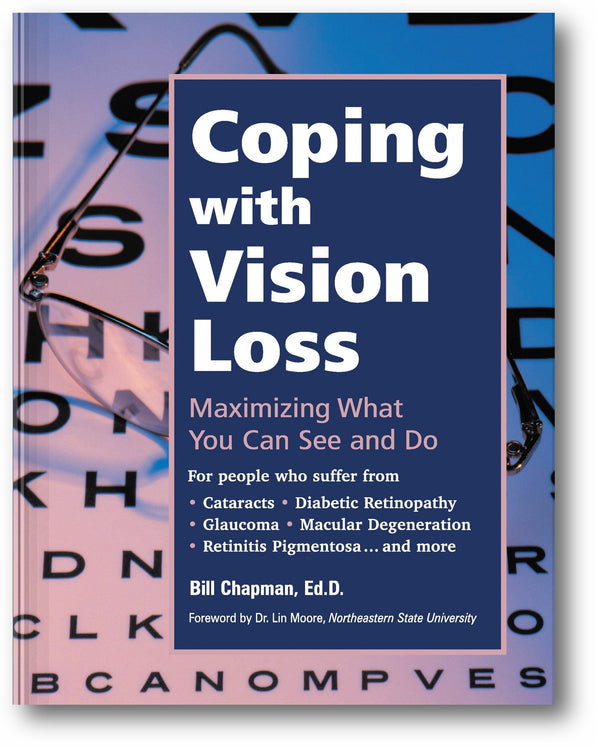

Coping with Vision Loss: Maximizing What You Can See and Do
At a glance
Coping with Vision Loss by Bill Chapman offers options for people with severe visual impairment, focusing on five leading causes of vision loss: cataracts, diabetic retinopathy, glaucoma, macular degeneration and retinitis pigmentosa. It explains how these conditions affect sight and teaches skills such as eccentric viewing and scanning, along with vision aids like large print products and talking appliances. It's for readers living with vision loss who want to make the most of their remaining sight.
A "Bible" of Vision Rehabilitation...
Coping with Vision Loss offers a wealth of options to those with severe visual impairment. It concentrates on the five leading causes of vision loss: cataracts, diabetic retinopathy, glaucoma, macular degeneration and retinitis pigmentosa. The author helps readers to understand how these conditions destroy vision and what they can do about it. His approach covers:
- things to know: visual acuity, how we see, eye fatigue and pain
- skills to learn: such as eccentric viewing and scanning
- vision aids: large print products, talking appliances, telescopic glasses and more
Chapman teaches readers how they can maximize the use of their remaining visual perception. With the skills and techniques discussed in this book, readers will be able to reduce and even overcome the devastating impact of vision loss, while regaining independence, privacy and self-esteem.
Book details
- Author
- Bill Chapman
- Imprint
- Hunter House, an imprint of Turner Publishing Company
- Published
- Pages
- 304
- Formats
- Paperback, Hardcover
- Subjects
- Health & Fitness › Vision
Medical › Ophthalmology - Topics
- vision rehabilitation · visual impairment · macular degeneration · glaucoma · cataracts · diabetic retinopathy · low vision aids · eccentric viewing
- ISBN-13
- 9780897933162 (Paperback)9781630267773 (Hardcover)
About the author
BILL CHAPMAN, Ed.D., has been a consultant for the visually impaired for 30 years and is the founder of Vision Loss Technology.
Chapman holds a doctoral degree and, after becoming legally blind, established a mobile low-vision aids service that served Texas, Oklahoma, and New Mexico.
When not writing, Chapman focuses on serving as a role model for others who have lost vision, a commitment that has remained his primary objective since retiring.
Secure Checkout With
Also available from these retailers. We may earn a commission on purchases made through these links.