
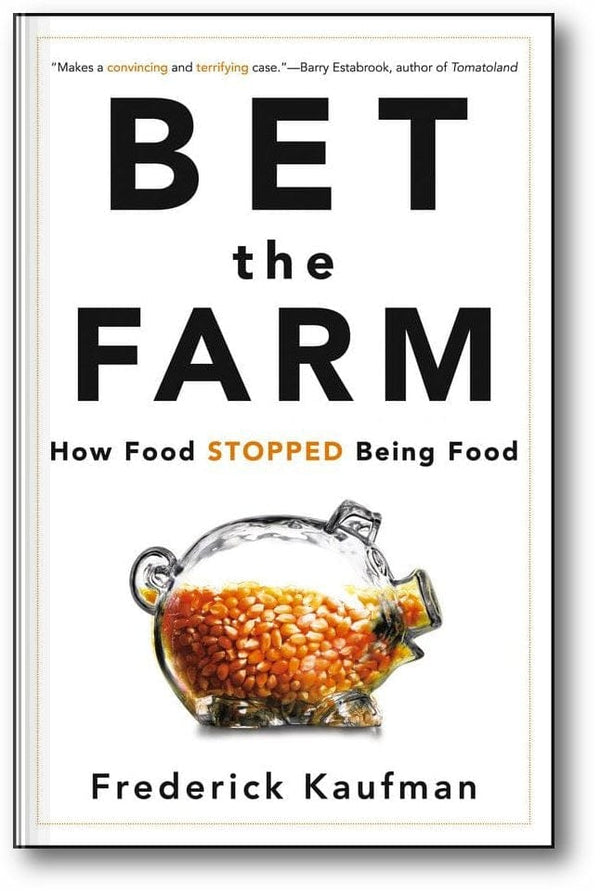
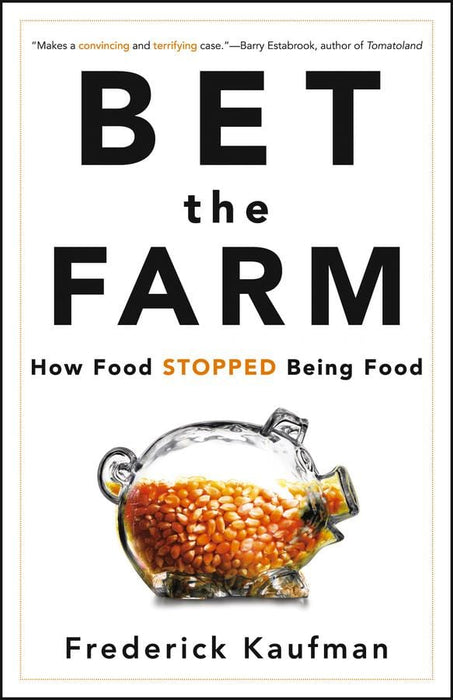
Bet the Farm: How Food Stopped Being Food
- Visits the front lines of the food supply system and food politics as Kaufman visits farms, food science research labs, agribusiness giants, the United Nations, the Chicago Mercantile Exchange, and more
- Explains how food has been financialized and the powerful consequences of this change, including: the Arab Spring, started over rising food prices; farmers being put out of business; food scientists rushing to make easy-to-transport, homogenized ingredients instead of delicious foods
- Explains how the push for sustainability in food production is more likely to make everything worse, rather than better--and how the rise of fast food is bad for us, but catastrophic for those who will never even see a McNugget or frozen pizza
We earn a commission for purchases made through the following links.
Book details
- Author
- Frederick Kaufman
- Imprint
- Trade Paper Press, an imprint of Turner Publishing Company
- Published
- Pages
- 272
- Formats
- Hardcover
- Subjects
- History › United States
- Topics
- industrial agriculture · food system · food politics · Wall Street · global hunger · food journalism · investigative reporting · food industry
- ISBN-13
- 9780470631928
About the author
FREDERICK KAUFMAN is a contributing editor at Harper’s Magazine and a Professor of English and Journalism at the City University of New York’s Graduate School of Journalism. His recent books include The Money Plot: A History of Currency’s Power to Enchant, Control, and Manipulate, Bet the Farm: How Food Stopped Being Food and A Short History of the American Stomach.
Kaufman holds a B.A. from Yale and a Ph.D. in English from the CUNY Graduate Center. His work has appeared in Foreign Policy, Wired, the New Yorker, Gourmet, Scientific American and the New York Times Magazine.
When he’s not writing, Kaufman has spoken on food justice at the General Assembly of the United Nations and appeared on MSNBC, Fox Business News, Bloomberg and the BBC World Service. That engagement with food systems and global economics runs throughout his books.
Frederick lives in New York.