
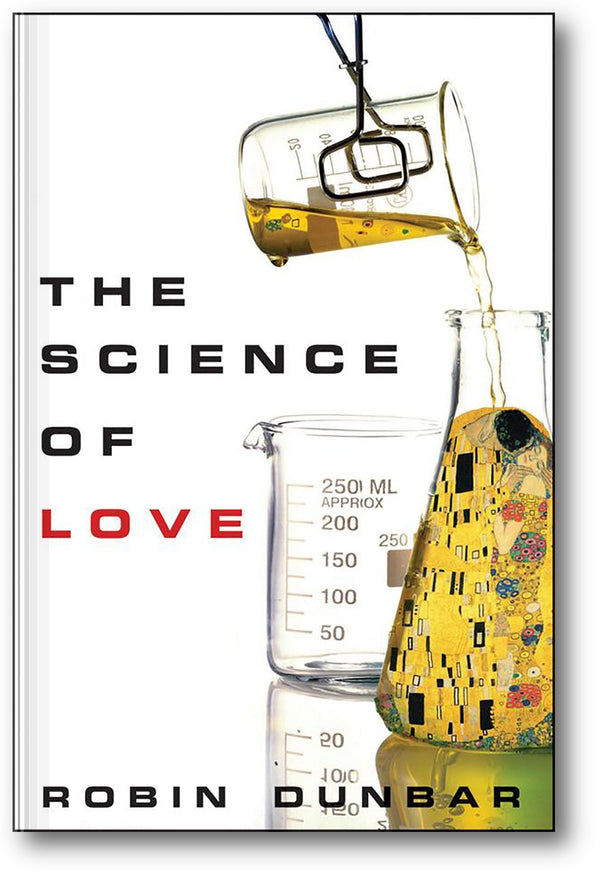
The Science of Love
Whether you live for Valentine's Day or are the type to forget your wedding anniversary, love is, quite simply, part of being human. In The Science of Love, renowned evolutionary anthropologist Robin Dunbar uses the latest science to explore every aspect of human love. Why do we kiss? What evolutionary benefit could there be to feeling like you would die for your mate? If love exists to encourage child-bearing and child-rearing, why do we love until death do us part (and beyond)? Is parental love anything like romantic love? Dunbar explores everything science has discovered about romance, passion, sex, and commitment, answering these questions and more.
- Draws on the latest scientific research to examine the many aspects of love--passion, commitment, intimacy, hugging, kissing, monogamy, cheating, and more--and explain why we have evolved to behave as we do
- Filled with fascinating insights into specific human behaviors and experiences, from the European air kiss on both cheeks to the phenomenon of love at first sight
- Written by Robin Dunbar, a prominent anthropologist and evolutionary psychologist whose work have been featured in Malcolm Gladwell's The Tipping Point and many other books
We earn a commission for purchases made through the following links.
Book details
- Author
- Robin Dunbar
- Imprint
- Trade Paper Press, an imprint of Turner Publishing Company
- Published
- Pages
- 320
- Formats
- Hardcover
- Subjects
- Science › Life Sciences › Evolution
- Topics
- human evolution · evolutionary anthropology · romantic love · monogamy · kissing and hugging · parental love · infidelity
- ISBN-13
- 9781118397657
About the author
ROBIN DUNBAR is a British biological anthropologist and evolutionary psychologist, and Professor Emeritus of Evolutionary Psychology at the University of Oxford. His books include The Science of Love, How Many Friends Does One Person Need? and Grooming, Gossip and the Evolution of Language.
Dunbar is a Fellow of the British Academy and of the Royal Anthropological Institute, and an elected Foreign Member of the Finnish Academy of Science and Letters. He has received the Osman Hill Medal and the Huxley Medal, and holds a PhD from the University of Bristol. He is best known for formulating Dunbar’s Number, a proposed cognitive limit on human social relationships.